
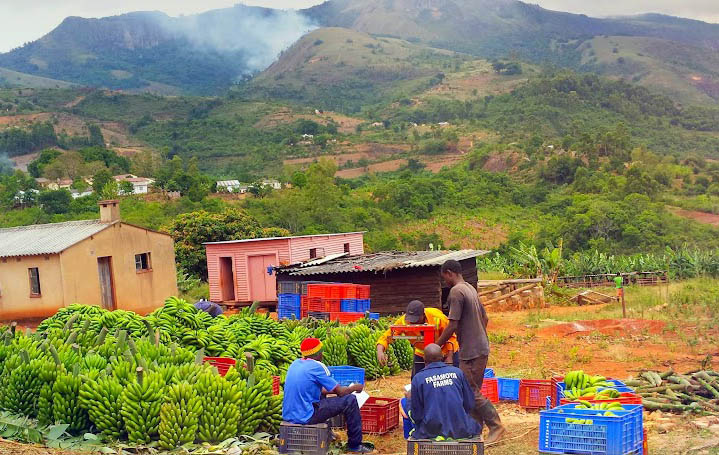

Honde Valley stands as one of the country’s most productive agricultural regions. Blessed with fertile soils, abundant rainfall, and a unique microclimate, the valley is a powerhouse for crops such as bananas, tea, coffee, avocados, and sugarcane, making it a vital contributor to Zimbabwe’s food security and export economy.
Microclimate
Located in Region 1, Honde Valley receives the highest rainfall in Zimbabwe, approximately 900 mm of rainfall per year, during the rainy season from November to March, with most precipitation being convective (thunderstorms) and supplemented by orographic rainfall, due to its mountainous terrain.

Honde Valley's microclimate is shaped by its geography, altitude, and seasonal weather patterns. The valley floor sits at approximately 780–900 m above sea level, while the surrounding Eastern Highlands rise to about 1,800 m. This dramatic elevation change contributes to an intensified orographic effect, where moist air ascends the highlands, cools, and produces significant rainfall in the valley.
Banana Capital of Zimbabwe

Honde Valley is Zimbabwe’s largest banana-producing area, with thousands of smallholder farmers driving production. These farmers supply both local and national markets, ensuring a steady flow of fresh produce across the country. To reduce post-harvest losses and stabilize prices, the government recently commissioned the Hauna Fruit and Vegetable Processing Plant, which processes up to 4 tonnes of bananas per day into chips and other products. This initiative has transformed the local economy, creating jobs and adding value to raw produce.
Tea Estates
The Eastern Highlands of Zimbabwe are home to the country’s most important tea estates. The valley’s high rainfall and fertile soils make it ideal for tea cultivation, which is marketed internationally. Aberfoyle Tea Estate is one of the most iconic estates, surrounded by rivers, forests, and rolling tea fields. Aberfoyle Lodge offers accommodation, golf, birding, and eco-tourism experiences within the tea plantations. Wamba Tea Estate is known for its tea processing factory.

These estates are central to Zimbabwe’s tea industry, combining agriculture, tourism, and renewable energy. They provide jobs for thousands of local workers in farming, processing, and hospitality. They also support schools, clinics, and local infrastructure in Honde Valley.
Local Staples and Traditional Foods

Trucks with avocados and sugarcane leave Honde Valley daily for Mbare market in Harare. Tea is produced for both domestic use and export and coffee is grown on smallholder plots and estates. Other common foods grown include;sweet potato and taro root, maize etc. Honde Valley is not only about commercial farming; it is also home to a variety of wild fruits that enrich local diets and traditions.


Seasonal fruits such as mangoes, guavas, sugar plums, and wild apples provide nutrition and cultural value, and in some cases, supplementary income for rural households.